
MY OCTOPUS TEACHER
What has a highly complex system of Governance and is migrating up North? No, no, I’m not talking about 10 Downing Street.
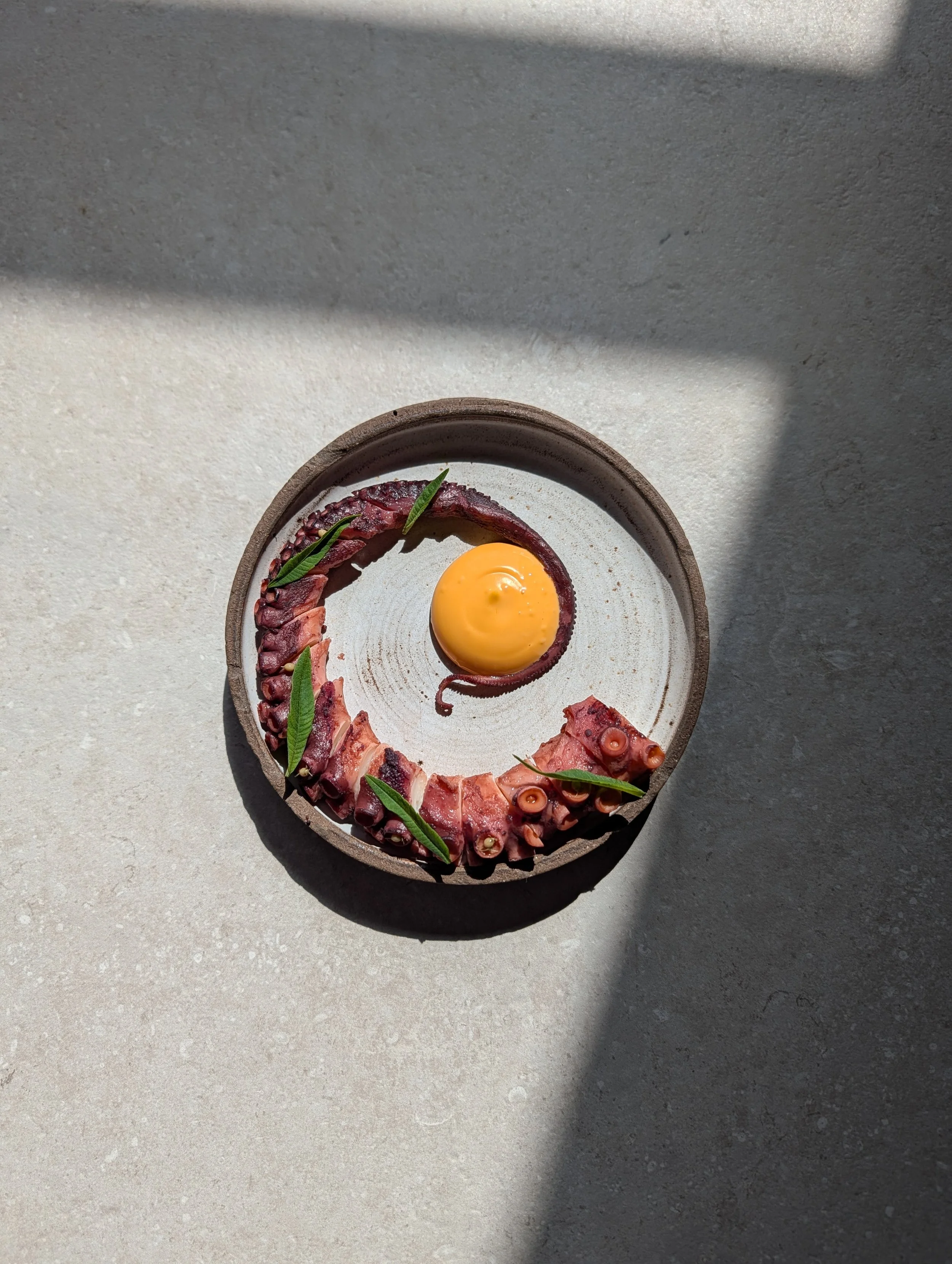
In the past year, there has been an increase in the number of octopus migrating up north from the southern Atlantic to the south-western shores of the UK. It is believed to be the result of rising temperatures in the Atlantic surrounding Morocco and Spain, which, historically, are the main areas for catching Octopus. Sea temperatures in these areas have become too warm. The temperatures around Cornwall, however, are now just right. This has sent octopus migrating en masse to the UK shores. As such, at the opening of the season in Morocco and Spain, they reported their seas were empty of the cephalopods.
This isn’t the first time this has happened. In 1899 and 1950, there was a report of an octopus bloom in the North Atlantic. The currents and weather systems made the right conditions for octopus to migrate north. Even so, it is confounding to observe the change of an entire ecosystem.
Since March of this year, the landing at Newlyn fish market has been dominated by octopus. Octopus regularly makes up 90% of the entire daily catch; on one day, it made up 97%. At first, this was just by-catch but then, with fishermen seeing the high commodity value and ease of catch, they have targeted the octopus.
Because the British public does not have an appetite for octopus, each day 100’s tonnes of octopus are sold back to Spain through only 3 huge companies. Smaller companies such as Kernowsashimi - family-run fisheries that run a syndicate with a dozen day boats are unable to find a market for the catch, and nothing much else is coming from the seas. This is putting the small fisheries of Cornwall and Devon under threat.
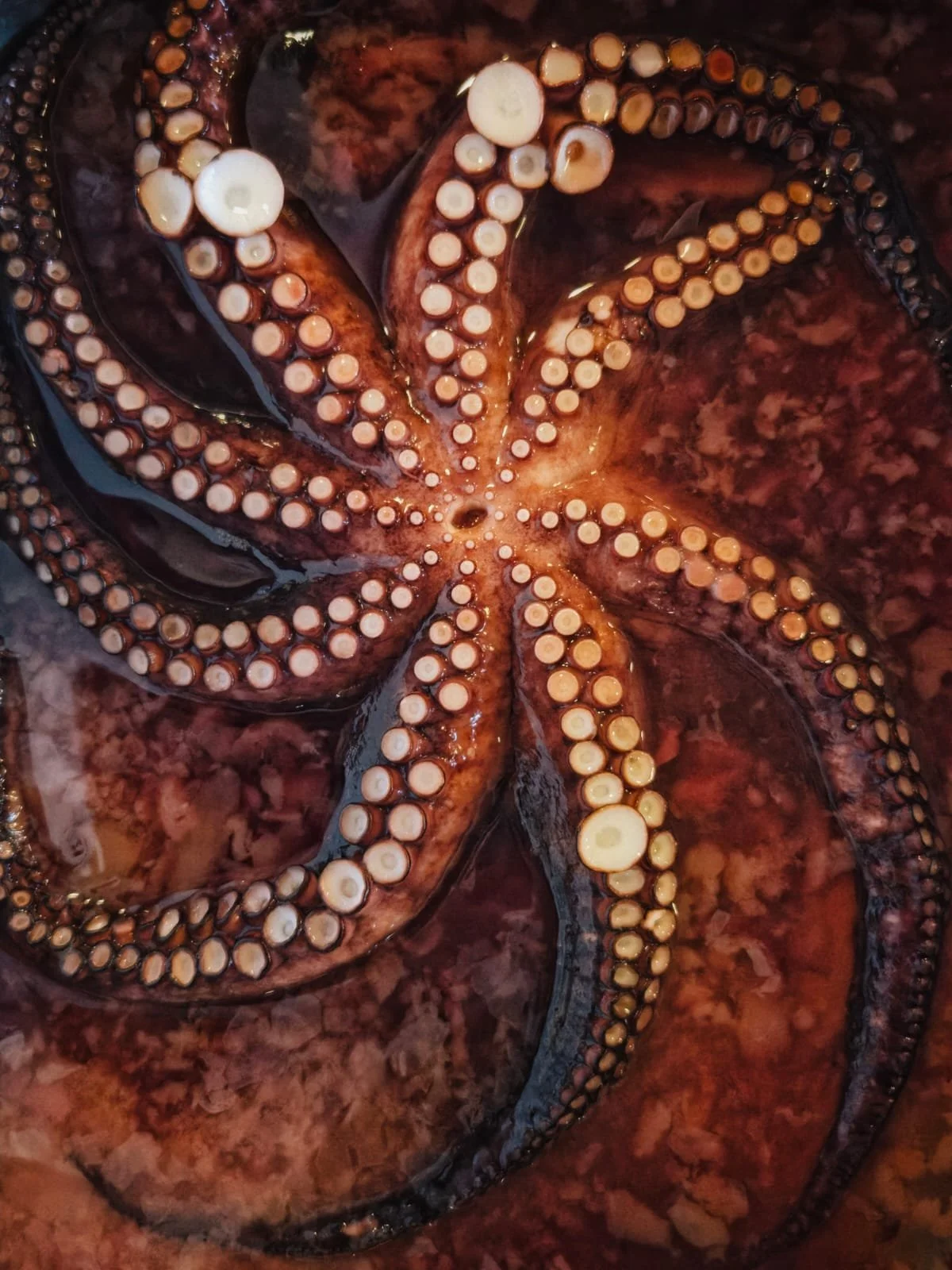
PHOTO: Cat Wilson
Deciding what to eat is a cultural choice; we inherit taste through family, and we are influenced by current trends. When asking people whether they would eat octopus, many have told me that they would not, as the octopus is an intelligent creature, citing the 2020 documentary "My Octopus Teacher" as a catalyst for their ethical decision. I don’t blame them. It is a tender story about a man and his intricate and personal relationship with the natural world. However, octopus is highly nutritious, it is full of protein, low in fat, and rich in vitamins and minerals. It is also, right now, in abundance, making it an incredibly sustainable choice for our plates.
The way we eat and what we eat is such a complex topic. What do you think about eating octopus? What are the things you consider when choosing your diet? Over this season, we are going to delve into this interesting and highly complex topic more through dishes, essays, visits, and in general the way we approach food.