VINEGAR MAN
On the Landing, the leafy herbs that punctuated summer dishes start to die back with the darker, colder nights, leaving bare stems and space for autumn. Anything that is left on the plant or of the plant at this stage can be harvested for the last of its flavour in the final leaves, over- or under-ripened fruit, and younger stems. These last offerings can, more often than not, be used to make vinegar. Anything that remains goes back into the soil, used as mulch to feed and protect the beds.
Vinegars are at the bedrock of our cooking; bringing depth to sauces and zing to dressings, pickling juicy root crops throughout these months, brining meat and curing fish. The range of acidity can never replace citrus fruit, but bound by an earthiness, their placement on a dish adds a character that can’t be found elsewhere.
Not to mention the health benefits of a good raw vinegar: a regulator of body temperature, clearer of chest and throat, an aid to blood flow. Its versatility stretches to the bar where our team often use our vinegars to create bright shrubs to pair alongside our food.
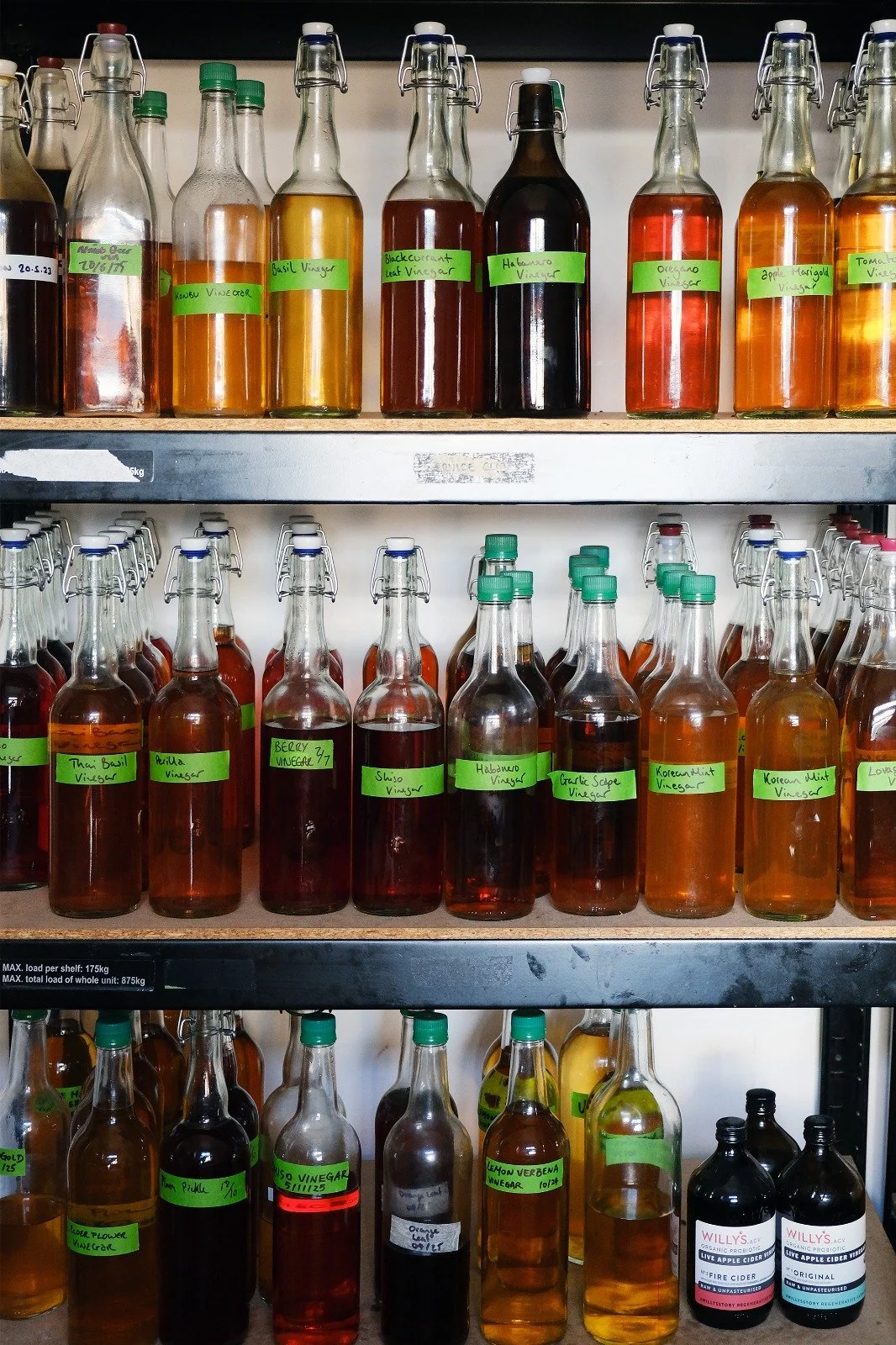
After a night of organisation, I was astounded by the array of colours and aromas. Our stores boast wild garlic vinegar, beetroot vinegar and red currant, habanero with a little kick and agastache with a grounded liquorice scent, perilla that, as a herb, offers layers of complexity in summer, suddenly transforms in the bottle with notes of warm cumin and clove as a vinegar set for the winter. Blood orange, damson, thick and fruity and many more. These stores allow us to improvise when cooking, their flavours adding a tertiary element to any preparation. Without them, we’d be in a pickle.
Photos: Fergus Byron