HUNGER GAP: HELEN’S MUTTON
On the Landing, the leafy herbs that punctuated summer dishes start to die back with the darker, colder nights, leaving bare stems and space for autumn. Anything that is left on the plant or of the plant at this stage can be harvested for the last of its flavour in the final leaves, over- or under-ripened fruit, and younger stems. These last offerings can, more often than not, be used to make vinegar. Anything that remains goes back into the soil, used as mulch to feed and protect the beds. The second day back to the restaurant, I took a trip to Jackson's with Marcus from Littlewoods Butchers. The job was to collect two of Helen’s Mutton that had been slaughtered for us by the team there.
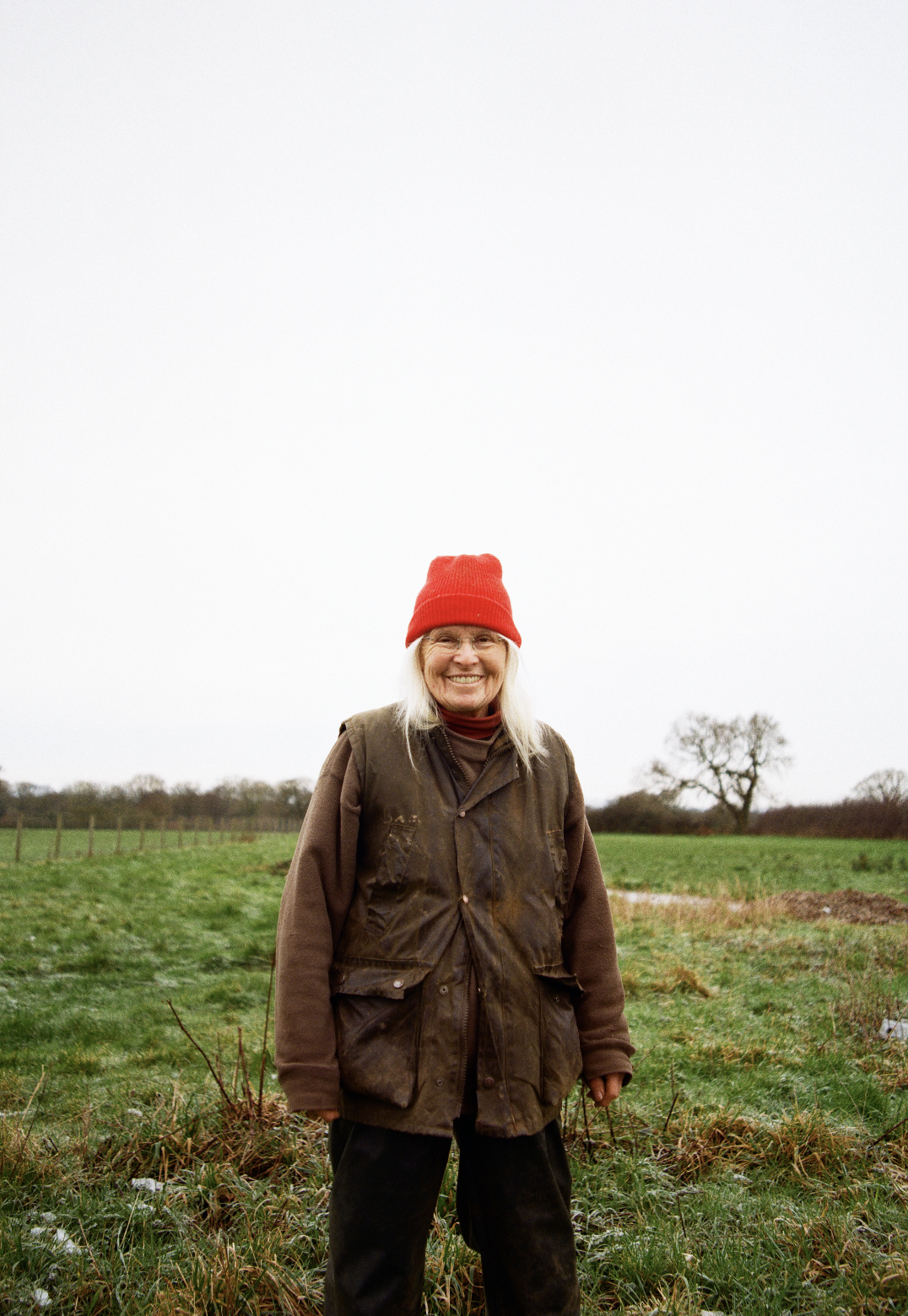
Photo: Kat Wood
The sky was bright blue, the air was crisp, and the roads were clear and gritted. As we got out of the town, the fields were still banked up with melting snow. The journey to Jackson's is what I really relish, getting to catch up on business with Marcus. He brought us a flask of hot coffee each. Even though it is him doing me the favour, he still supplies the coffee.
We collected the mutton with haste from Jackson's, the slaughterhouse, loaded up and headed back to Stockport. It felt great to hang the first beasts up in the fridge. With heavy limbs that roast and braise so well. The mutton, one 3 years old and one 6, are the Hebridean’s we work with every year, raised by our dear friend Helen Arthan.
These first mutton mark the beginning of a new year. Not so much, for me, in terms of the calendar but more by the near-dormant fields that offer only a handful of root crops in these coldest months. This is the part of the year that we yield a lot less from the land, depending more on the stores of grains and seeds from people such as Gilchesters and Hodmedods and the stores of our pickles and preserves. We cook from a natural, local food system that now only exists in the cracks between the supermarkets. It once meant that local and seasonal were not an ethical option but a matter of fact. It now means for us, produce becomes more sparse, which in some ways can stretch our creativity.
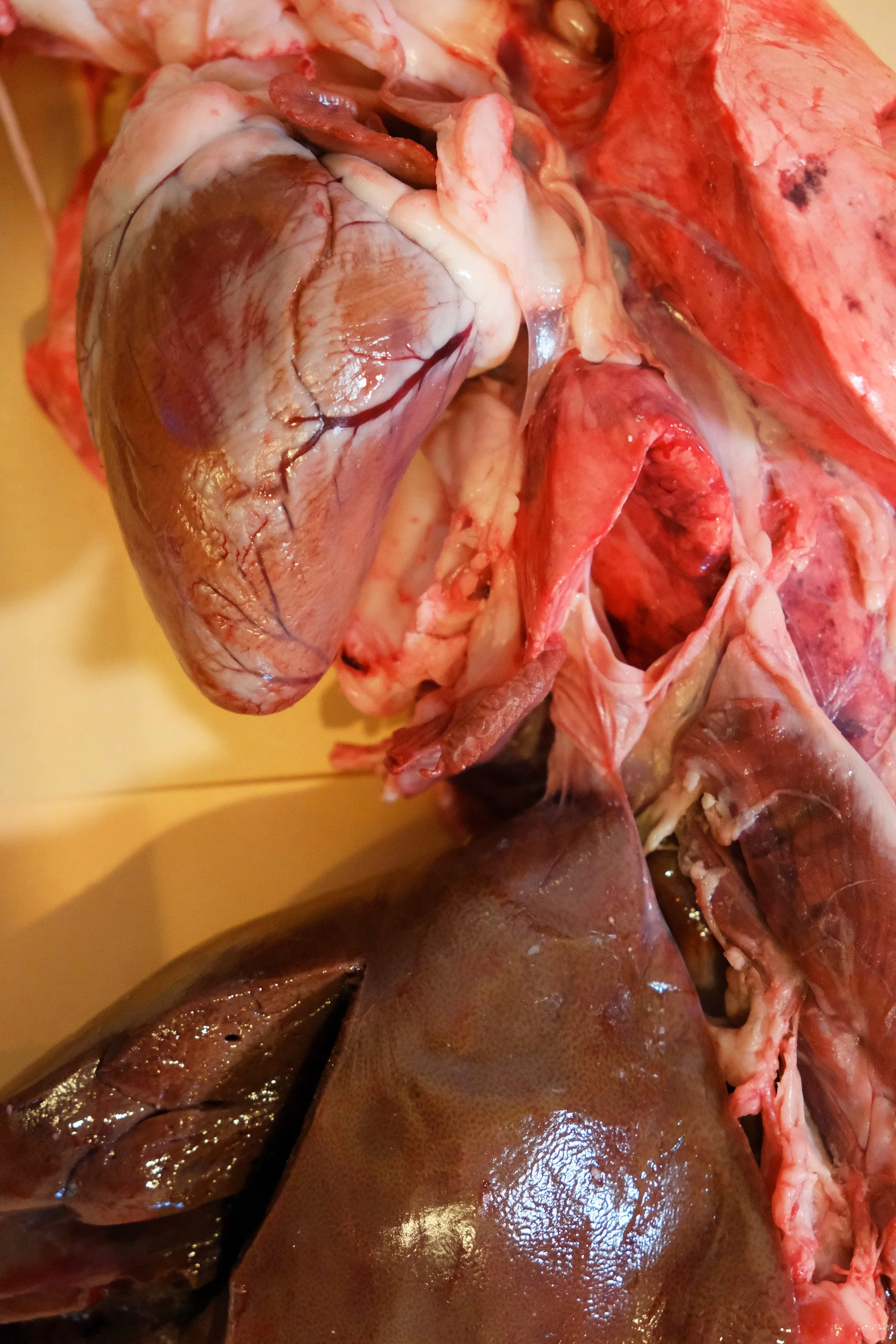
It has been fun to work with the ducks, but this whole mutton offers endless ways to approach the whole carcass. Today I took the pluck out of both of the mutton. The heart, the lungs and the liver, all connected by tissue and layers of prime fat. They will be minced with the necks and turned into faggots for one night only. Served with mashed potatoes and gravy. This is the food we want to cook right now. Food that makes you full and warm.
We’ve started to test the bellies in a fermented pepper paste that we made last September with chillies from the Landing. The bellies are to be bbq’d over coals. The fat from around the kidneys, the suet, will go to Jess to use in puddings and pastries. Mutton fat gives such depth when baked into pastry.
Last night, amongst our first guests were the Lewises’. Becca, our former restaurant manager and her whole family to celebrate her sister's birthday. We prepared a little tartare of mutton from a very small muscle under the rib cage known as the ‘race horse’ with slivers of pickled quince. This cut is tiny, perhaps 30 grams in total, and it always feels fun to whip something up in the middle of a service for a familiar group.
I look forward so much to using every part of these beasts and finding new ways to deliver them into the dining room.
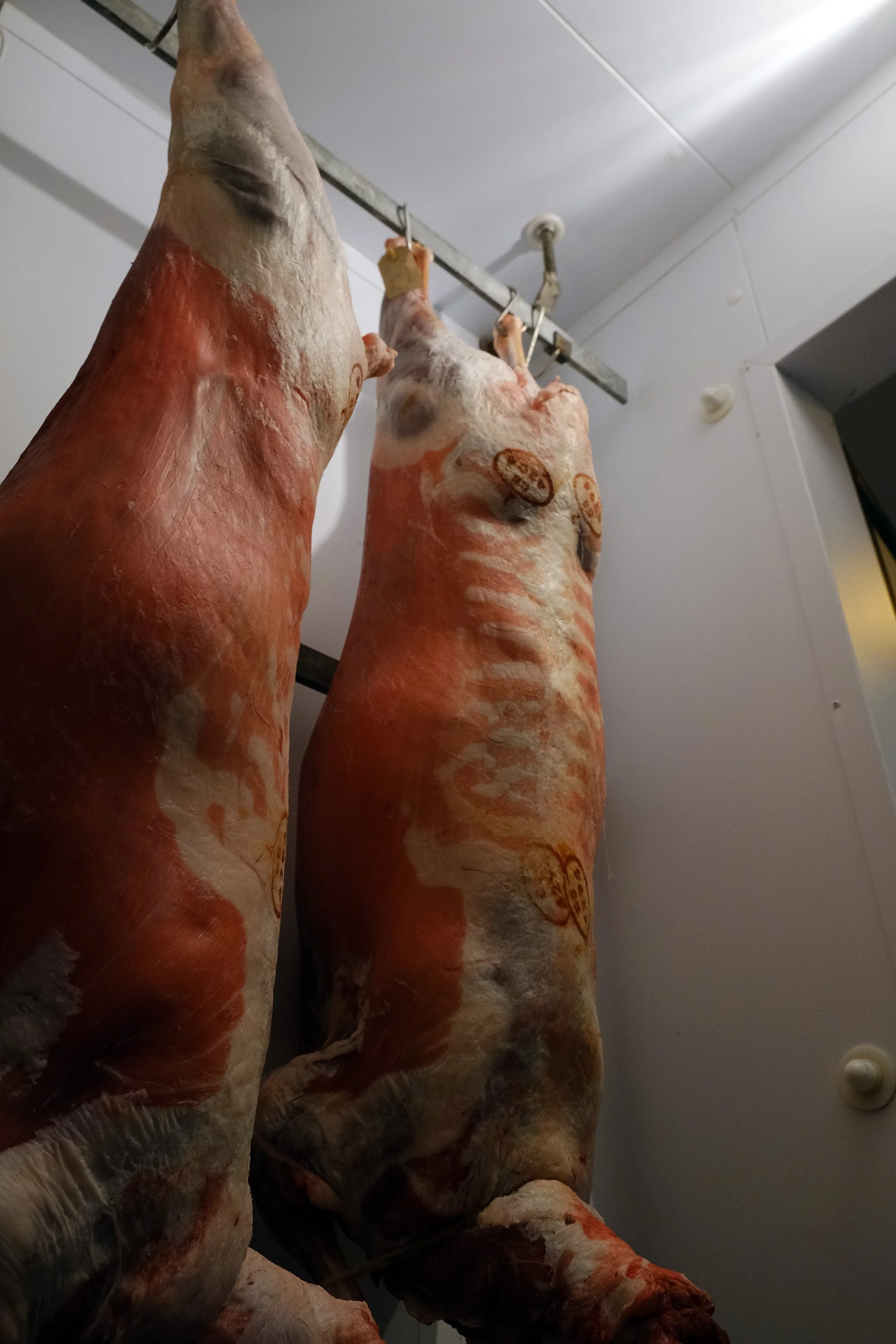
Photo: Fergus Byron