
damson ume boshi
Every year we make this preservation. It is one of my favourites for many reasons. They look like little jewels, beguiling rubies that would not go amiss adorning a fat prince’s little finger. The instant rush of salt and sour as soon as you pop one into your mouth is more rewarding than a dopamine doom scroll, and like an incel conspiracy theory, they tend to only get better with age.
The original recipe is called Ume Boshi, and it is something I discovered through love, and so preparing my version every year takes me close to those times I enjoyed it served by my friend, prepared by her 105-year-old grandma, eaten over white rice in the morning.
The original recipe is called Ume Boshi, and it is something I discovered through love, and so preparing my version every year takes me close to those times I enjoyed it served by my friend, prepared by her 105-year-old grandma, eaten over white rice in the morning.
As we don’t grow these fruits, and I have always enjoyed the preservation when shared with friends, I decided many years ago to transfer its preparation techniques onto some of our native fruits that I thought would lend well to its charms.
Although, in many ways, hearing of the Chef’s fermentation cupboard has become overtrodden and rather passe, in my cynical view, I have to remind myself that a good discovery is a good discovery regardless of cultural trends, and something delicious should never, ever be judged by the current fashion and only by how good it is to eat.
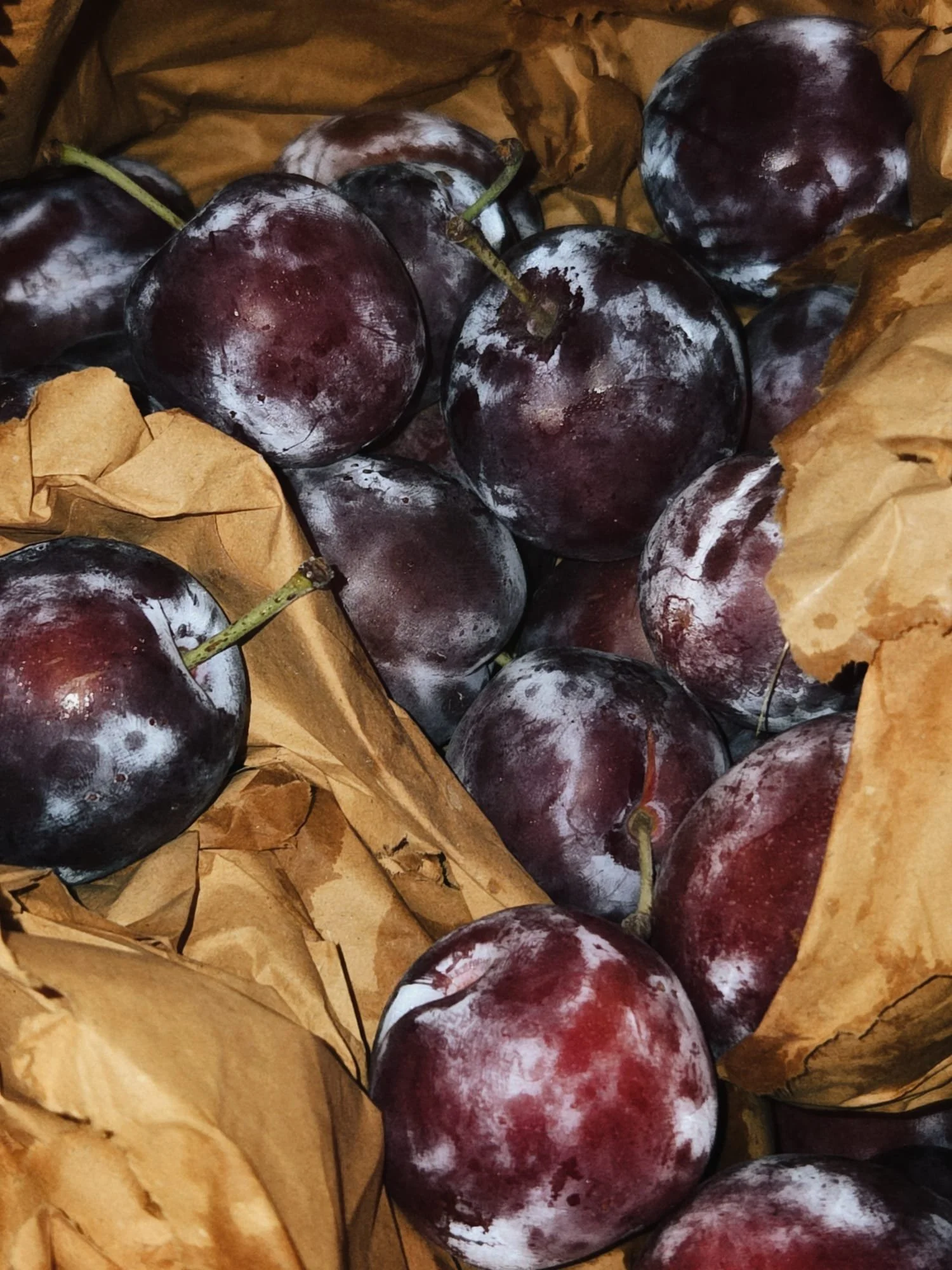
PHOTO: Cat Wilson
I always try to pick the damsons myself, and always a few days early. I am so specific because damsons are like Parisians; an impatient and capricious lot. They hide away all summer, ripening slowly. You pay attention, all summer long, waiting and anticipating, then as soon as your back is turned for one moment, they over ripen and start flinging themselves off the tree in a tantrum, only to be good for the worms.
Picking them a week early, you get a trim and unripe fruit, slightly thicker-skinned with lots of tannins, so that when you eat one, your face is forced to twist and turn in a wonderfully dramatic sort of way. This, I believe in, is the effect closest to the Ume used in Japan.When I have picked my fill of firm, slightly under-ripe damsons, I check them all over for holes, tears or blemishes. Take heed, a torn or damaged damson could spoil the whole mix.
In Japan, people will prune each plum from the tree, leaving a small stalk at the end and when an ume with a stalk is plucked from the jar it is more delightful than without because it displays the care of a perfectly picked fruit. It tells the story of the process. It is a joy to come across stories of nations that think with their stomachs.
After a thorough inspection, I soak in ice water for a few hours to remove some of the heavy bloom that carries the natural yeasts. Too much bloom would trigger a lactic ferment, but here we want things to go gently once everything is in the jar. We’re not looking for high action.
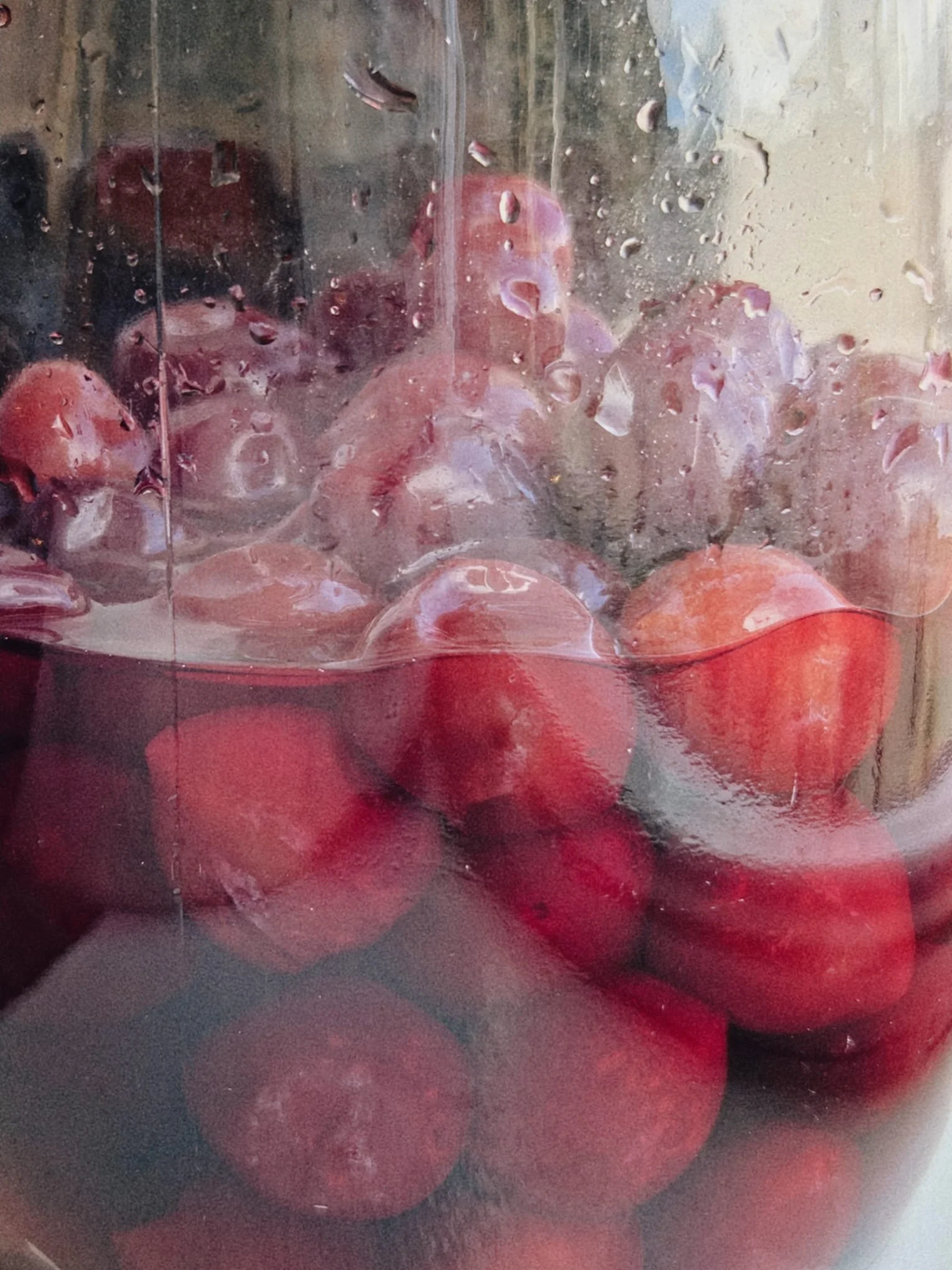
After the damsons are drained, I weigh and add coarse sea salt. Tossed very lightly and left in jars, these fruits will start to leach out their liquid slowly, the liquid will dissolve the salt, and the salt will enter back through the skins, permeating the flesh. It is a slow process. Give it weeks. Keep watching. It is fun to observe.Eventually, the liquid should submerge the fruits in their entirety. And what an elixir this liquid is. The Japanese call this Ume Se. It is a deep crimson. It is iridescently translucent and shines and shimmies on the spoon and shines and shimmies as it flows down your gullet. We use it sparingly in many preparations, seasoning sauces, glazing meats and so on. It is one of life’s great pleasures when, after performing a task to create one thing, you get two back of equal merit.
Once they have produced liquid, at around 2 weeks, you can check them by lifting one from the jar and squeezing gently. It should give, be soft and feel ‘cooked’. At this point, if the sun is out, drain them and place them on woven mats under the sun to shrivel slightly. They should be a little tacky and starting to wrinkle, and certainly not too firm, just dried out slightly. Personal preference is always key. Store them in jars. Keep them forever. I have some that are now five years old, and honestly, complexity only increases.
This week, we are opening jars from last year's batch and testing them out with quail stuffed with black pudding. This is about to come onto the menu, so you should really book a table. Do me a favour. Try eating out on a Wednesday, too. It won't hurt you. No mid-week treat ever hurt anyone.